
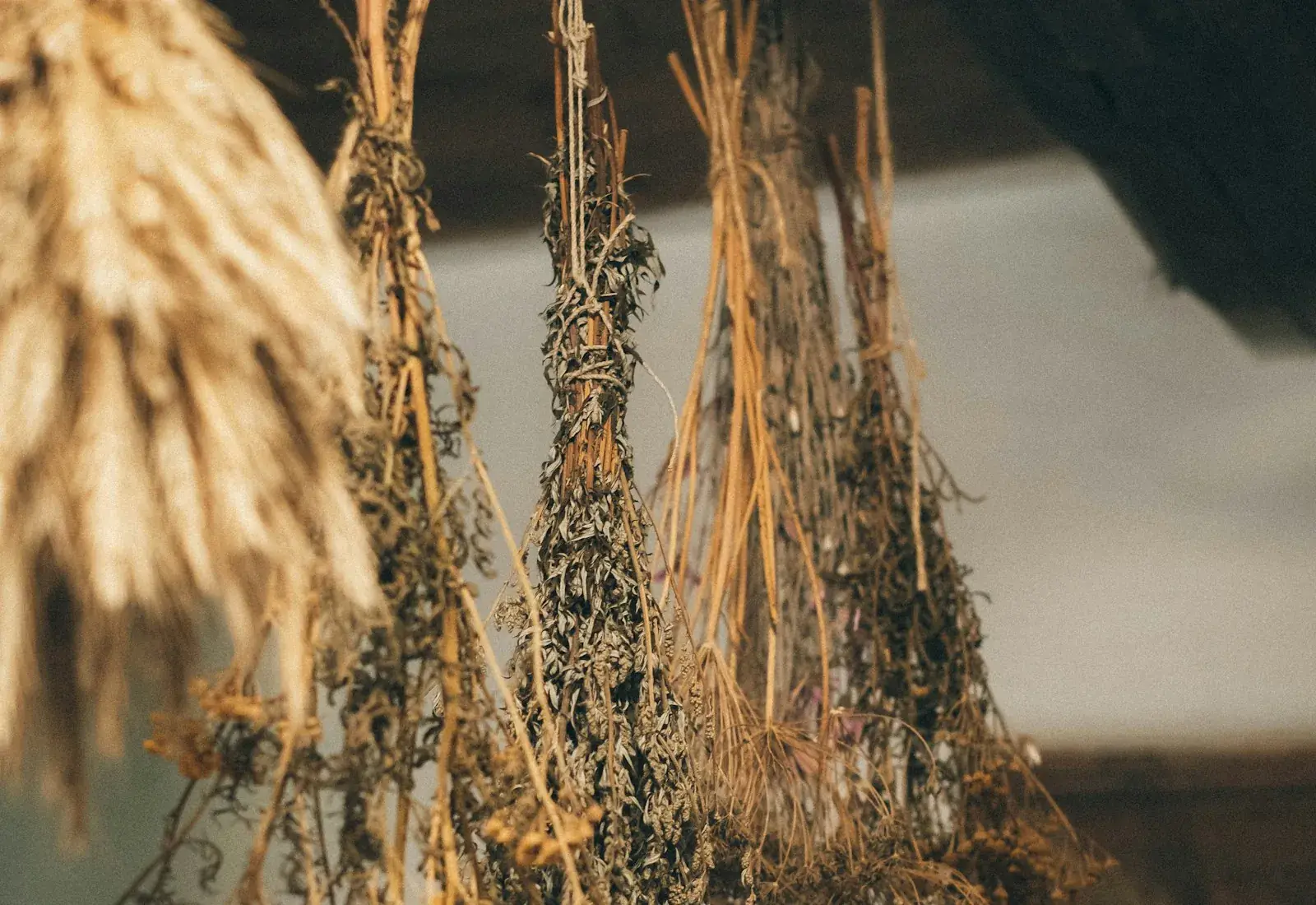
A tincture is a plant held in solution. That is the whole idea — alcohol and water pull different compounds out of plant material, and the ratio between them determines what ends up in the bottle.
Choosing the menstruum
The solvent is called the menstruum, and getting it right is most of the craft. Resins and alkylamides need a high alcohol percentage; mucilage and many glycosides prefer water. Echinacea root is extracted at 45% because that is roughly where its alkylamides and its polysaccharides can both be persuaded into solution at once.
Ratios
When you see 1:3 on one of our labels, it means one part plant material to three parts menstruum by weight and volume. A 1:5 tincture is more dilute. This is why comparing tinctures on price alone tells you very little — a cheaper 1:5 may contain less plant than a dearer 1:3.
If a tincture does not taste of the plant it came from, something has gone wrong upstream.
Three weeks in the dark
The macerating jars sit away from light and get agitated daily. Three weeks is conventional; some roots want longer. After that the whole lot goes into a press, and the marc — the spent plant material — is composted.
The tongue test
Every batch is tasted before it is bottled. Echinacea should produce a distinct tingling numbness within a few seconds. Valerian should be genuinely unpleasant. Gentian should be aggressively bitter at a dilution of one part in several thousand. These are not affectations — they are the fastest quality check available, and they have been used for as long as anyone has made these preparations.